Ornament Crime 裝飾罪惡
• NTUE (國立臺北教育大學 National Taipei University of Education), Taiwan
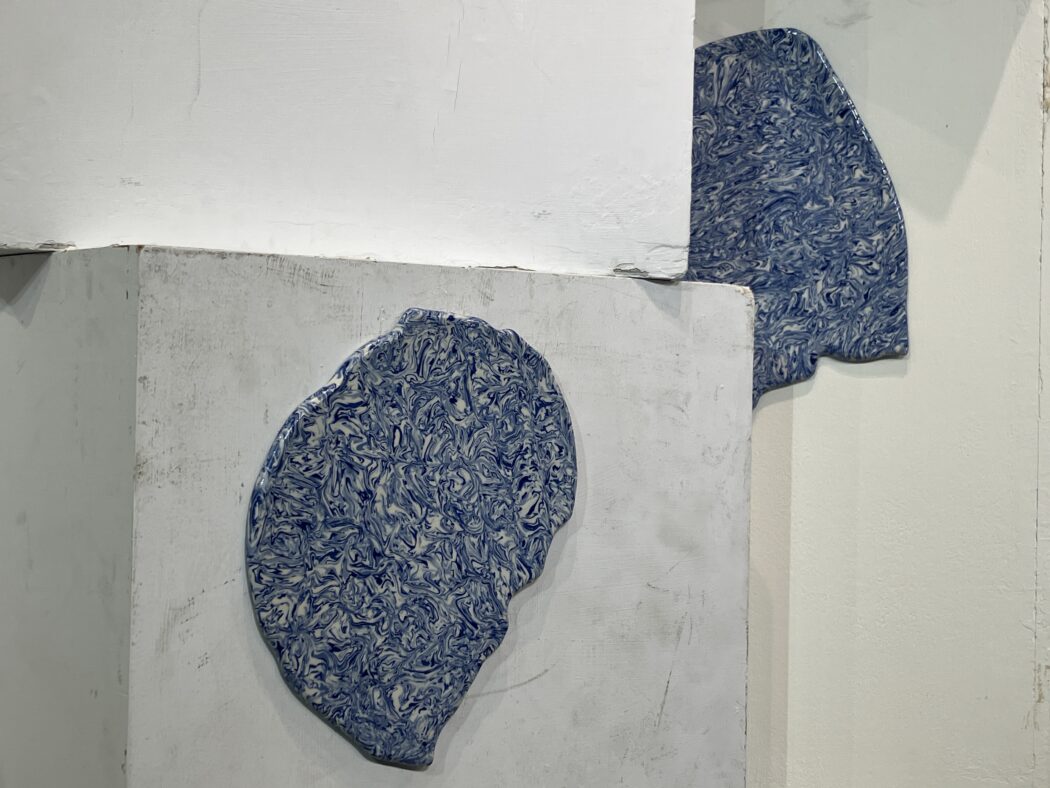
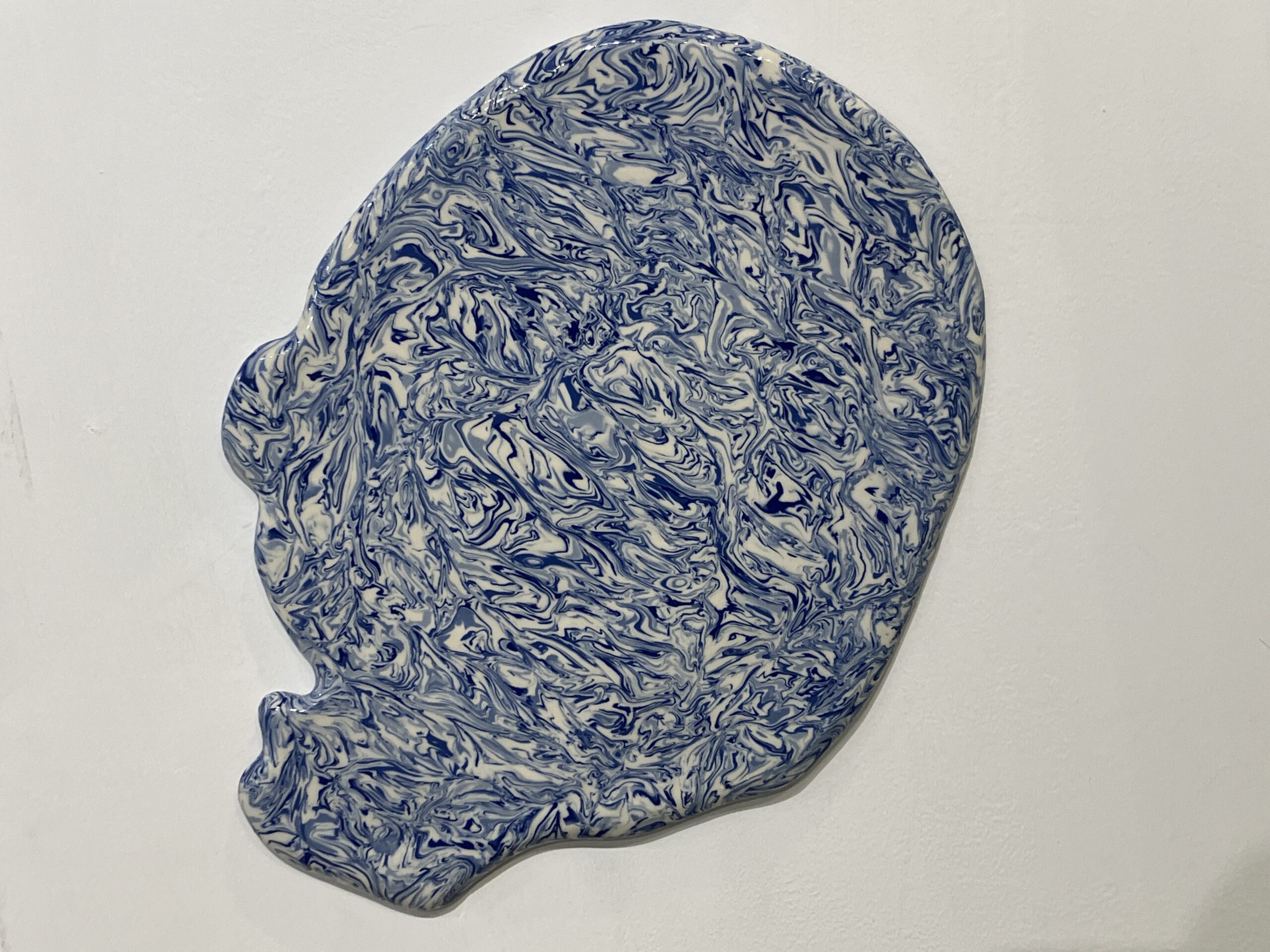
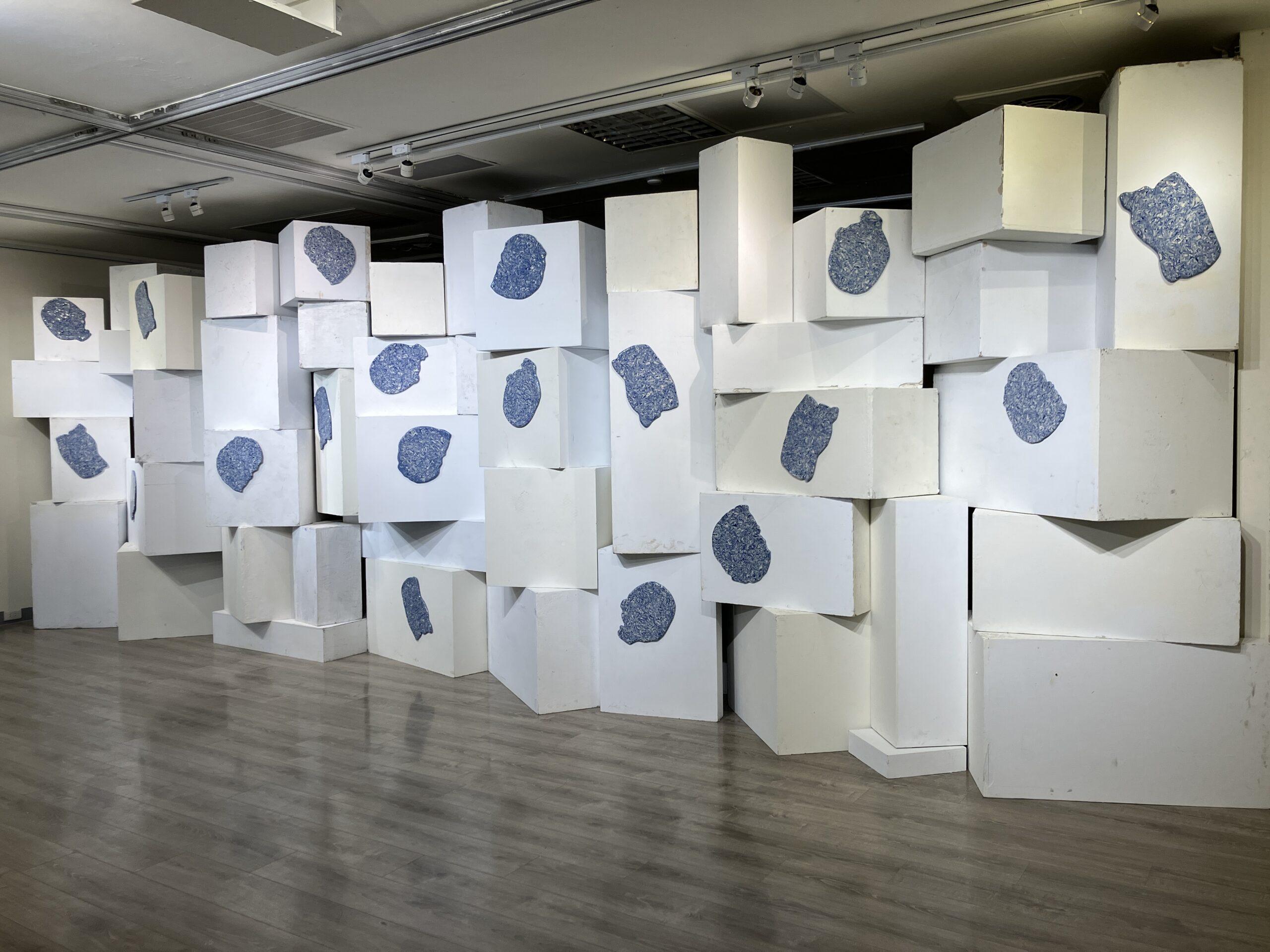
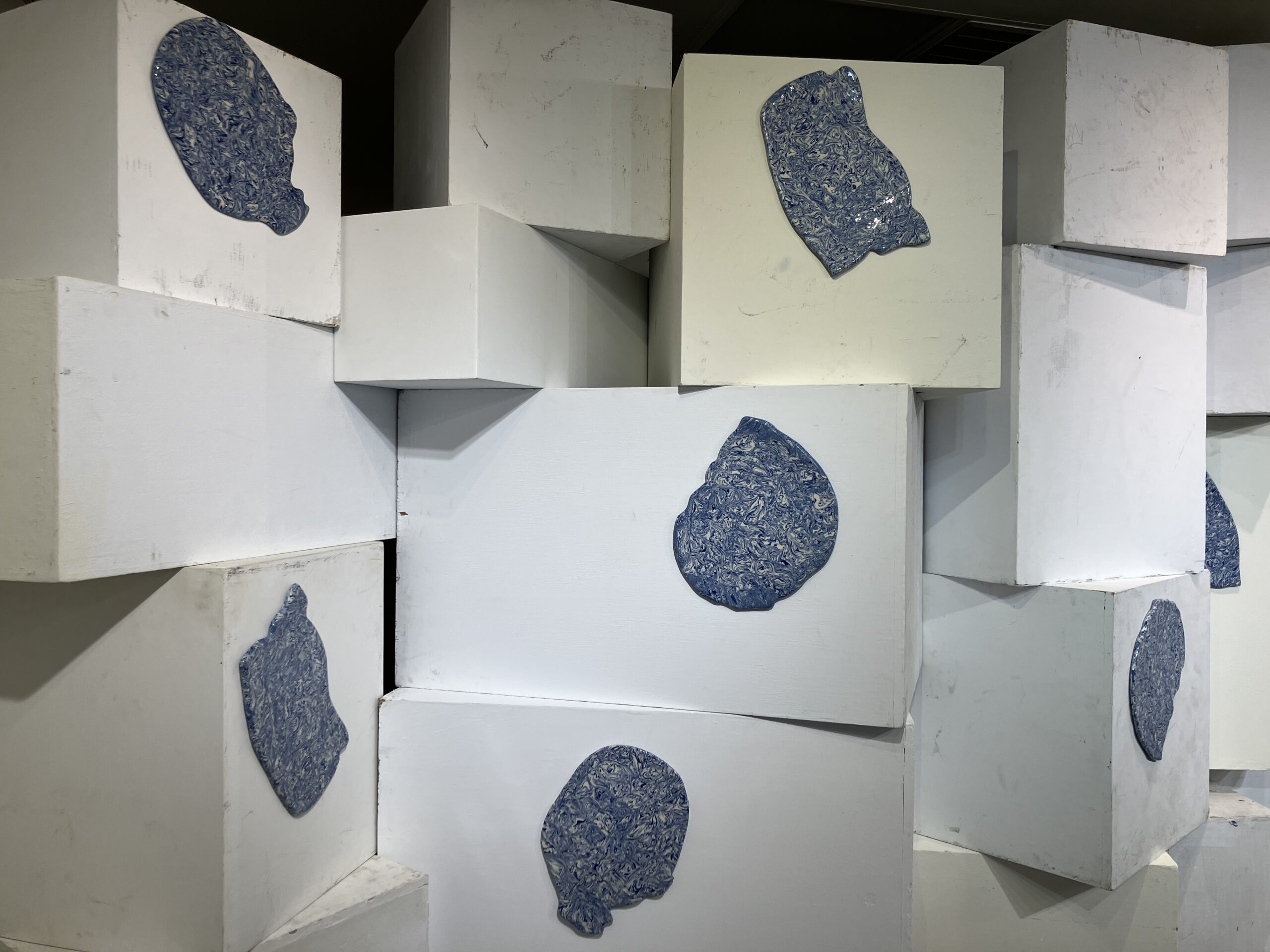
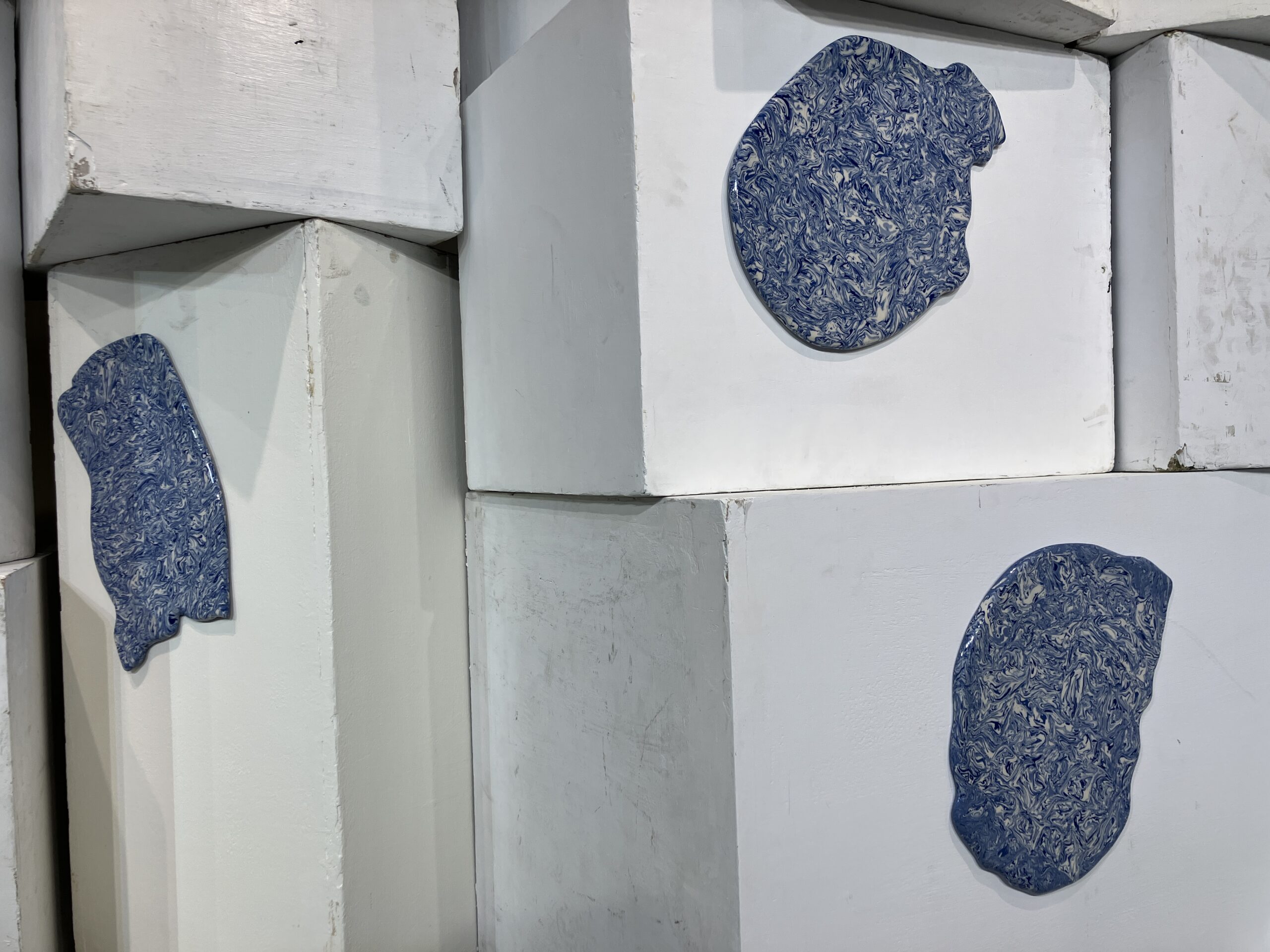
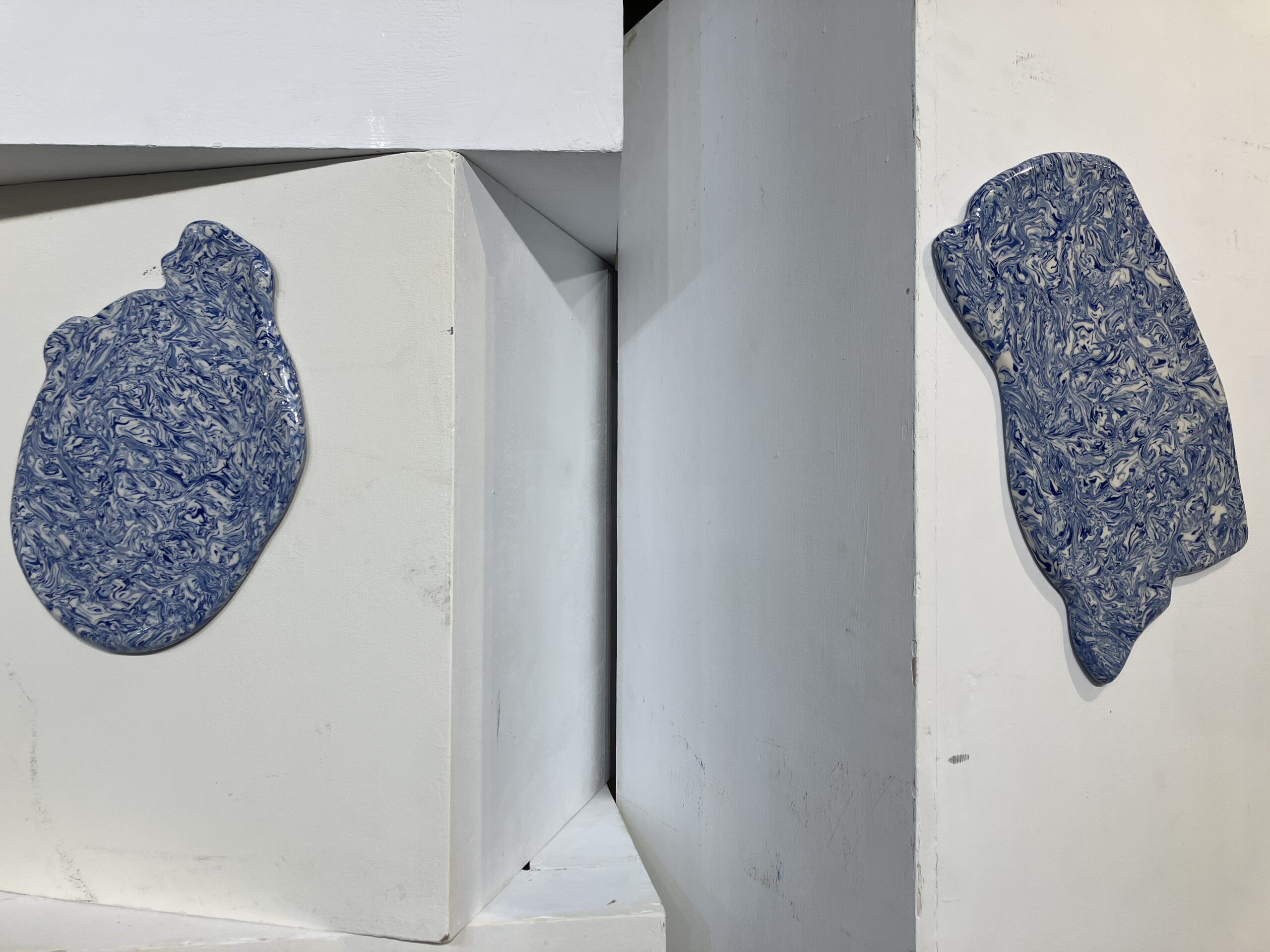
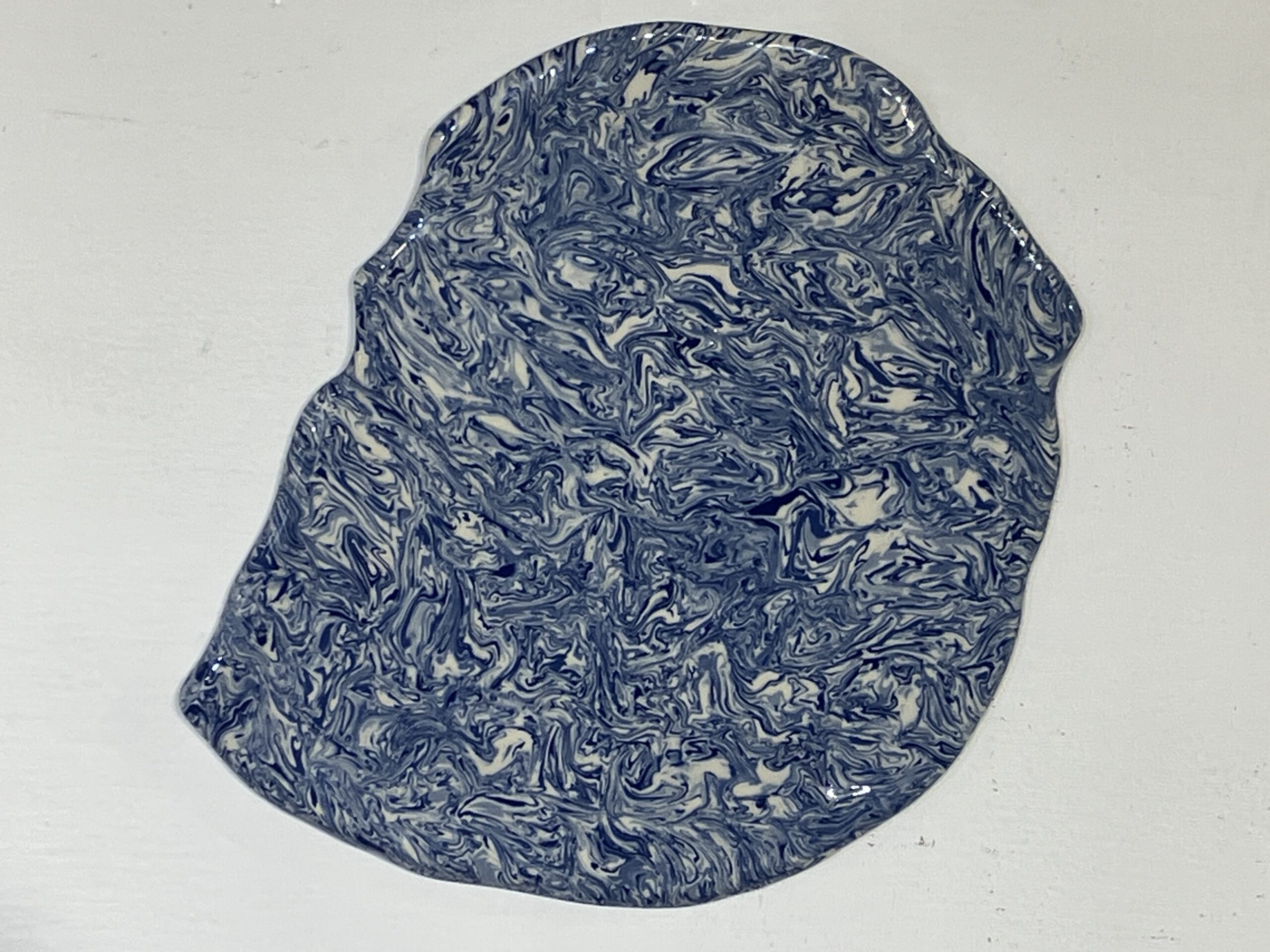
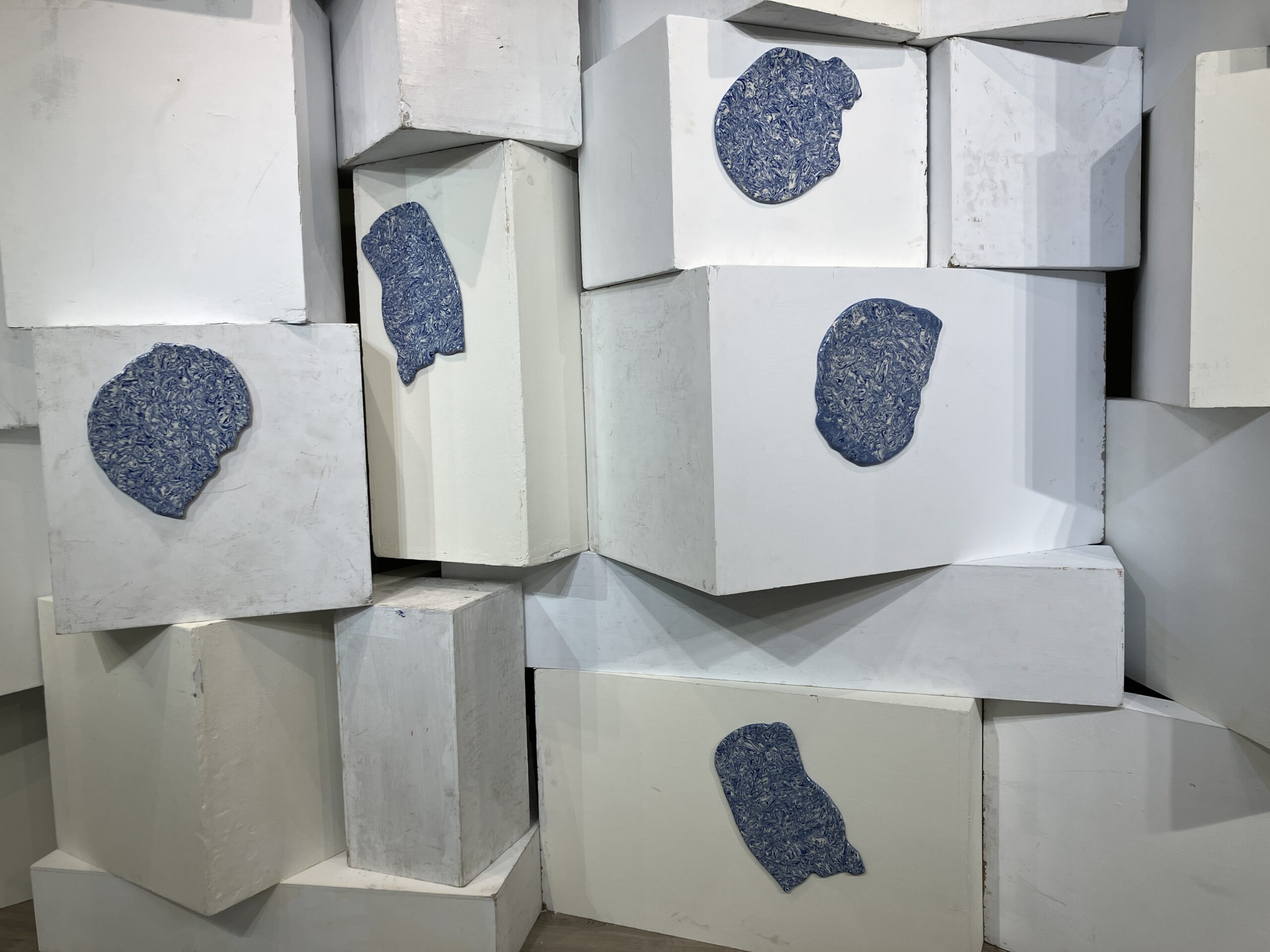
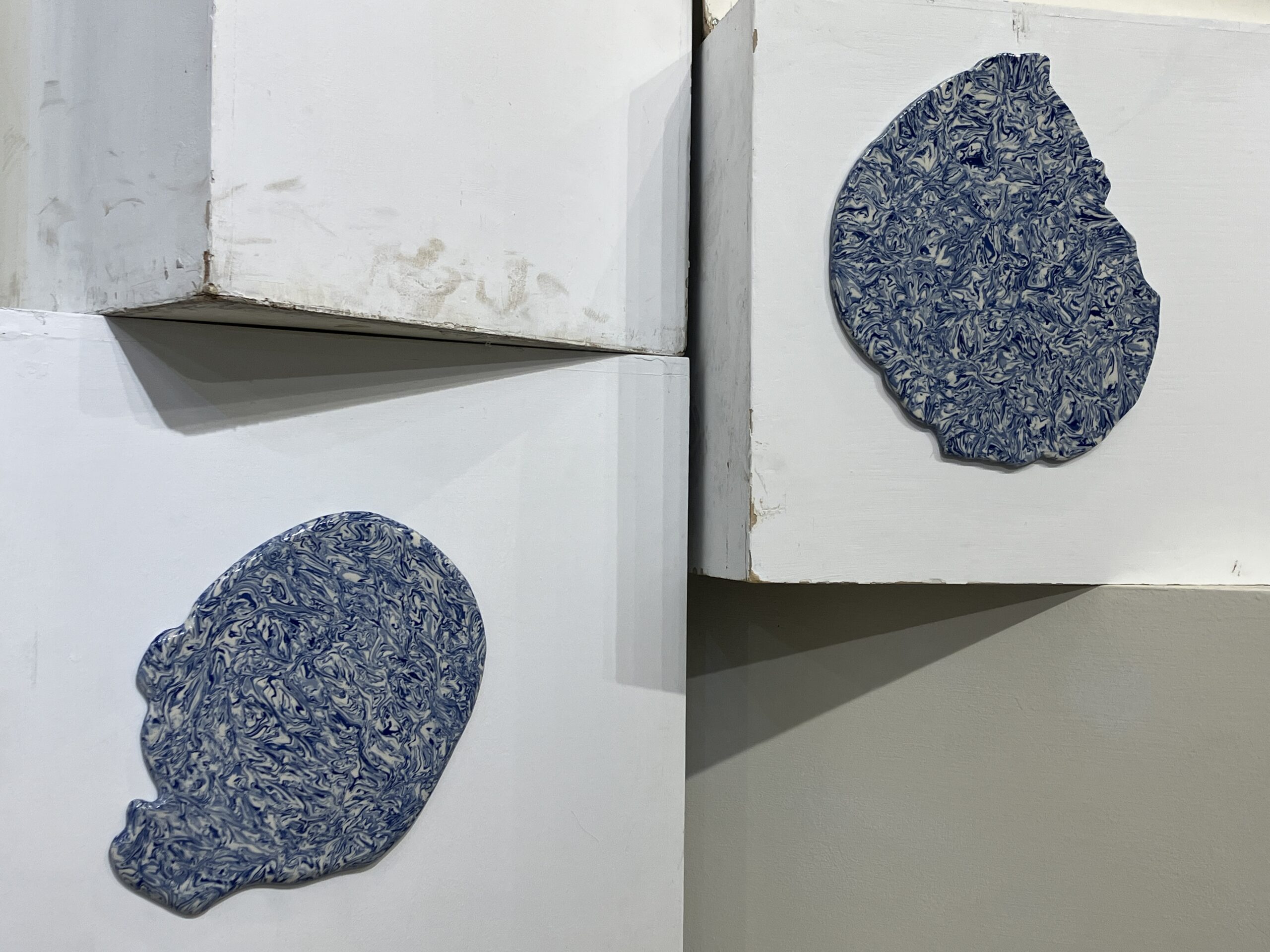
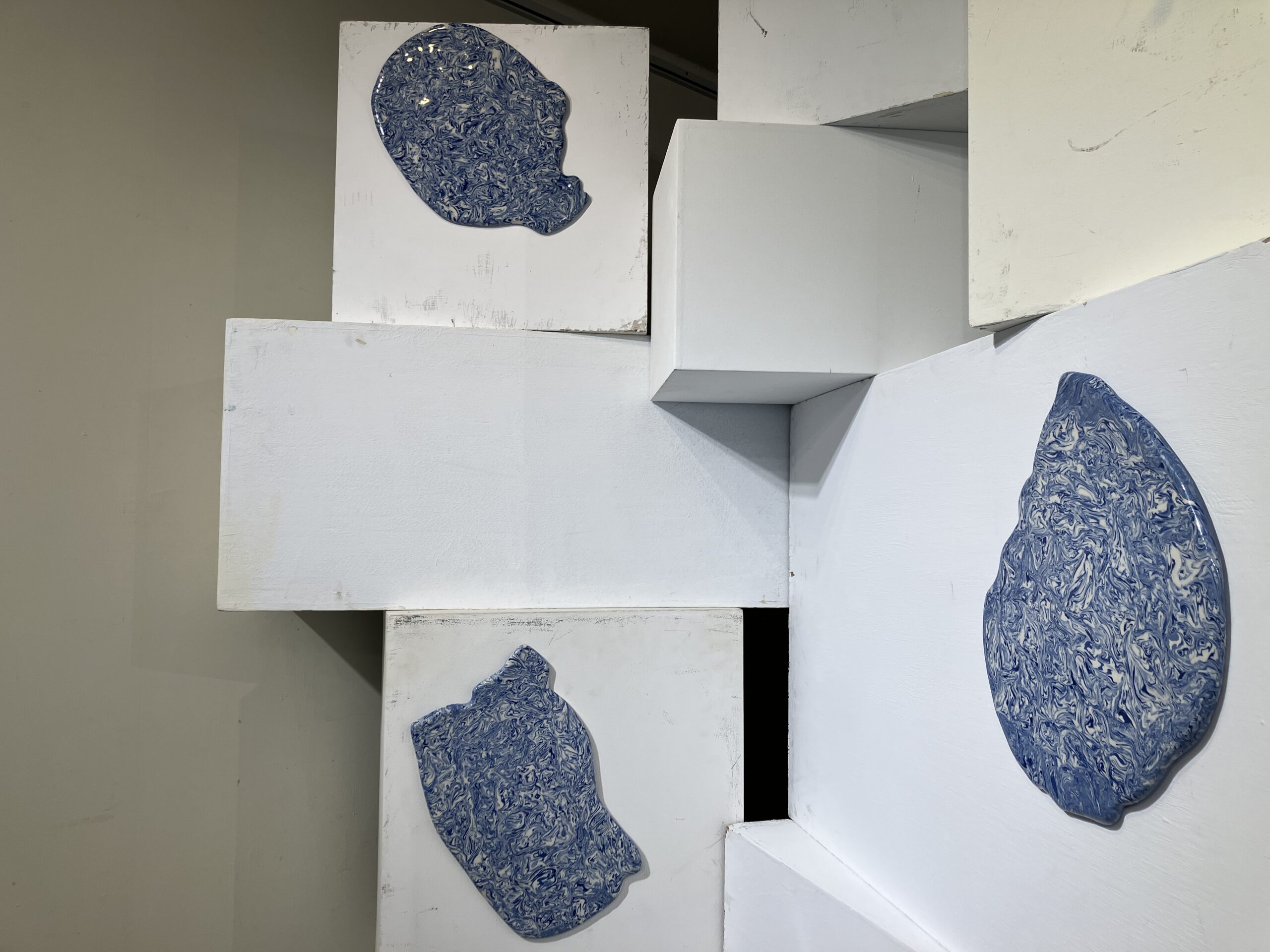
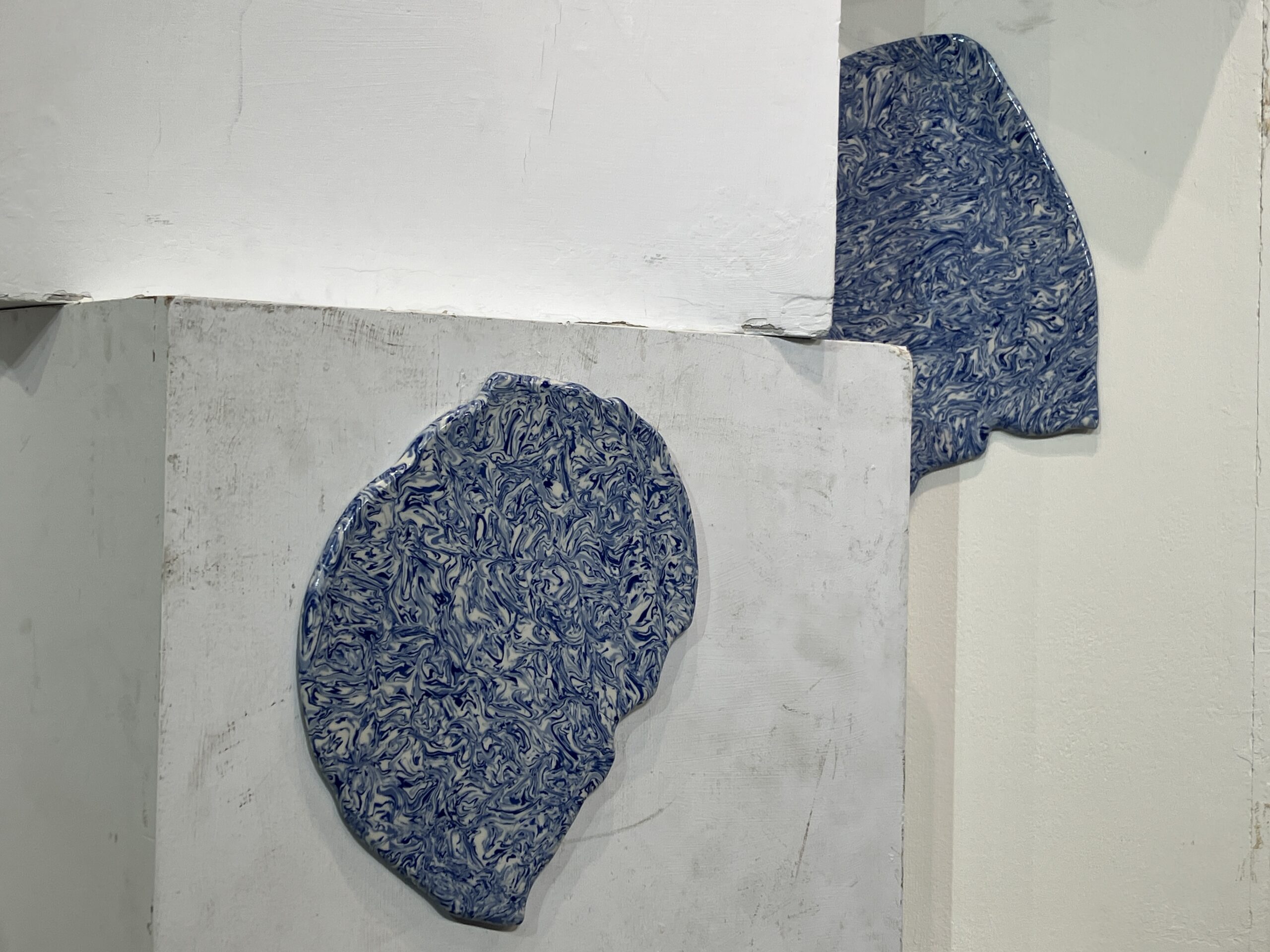
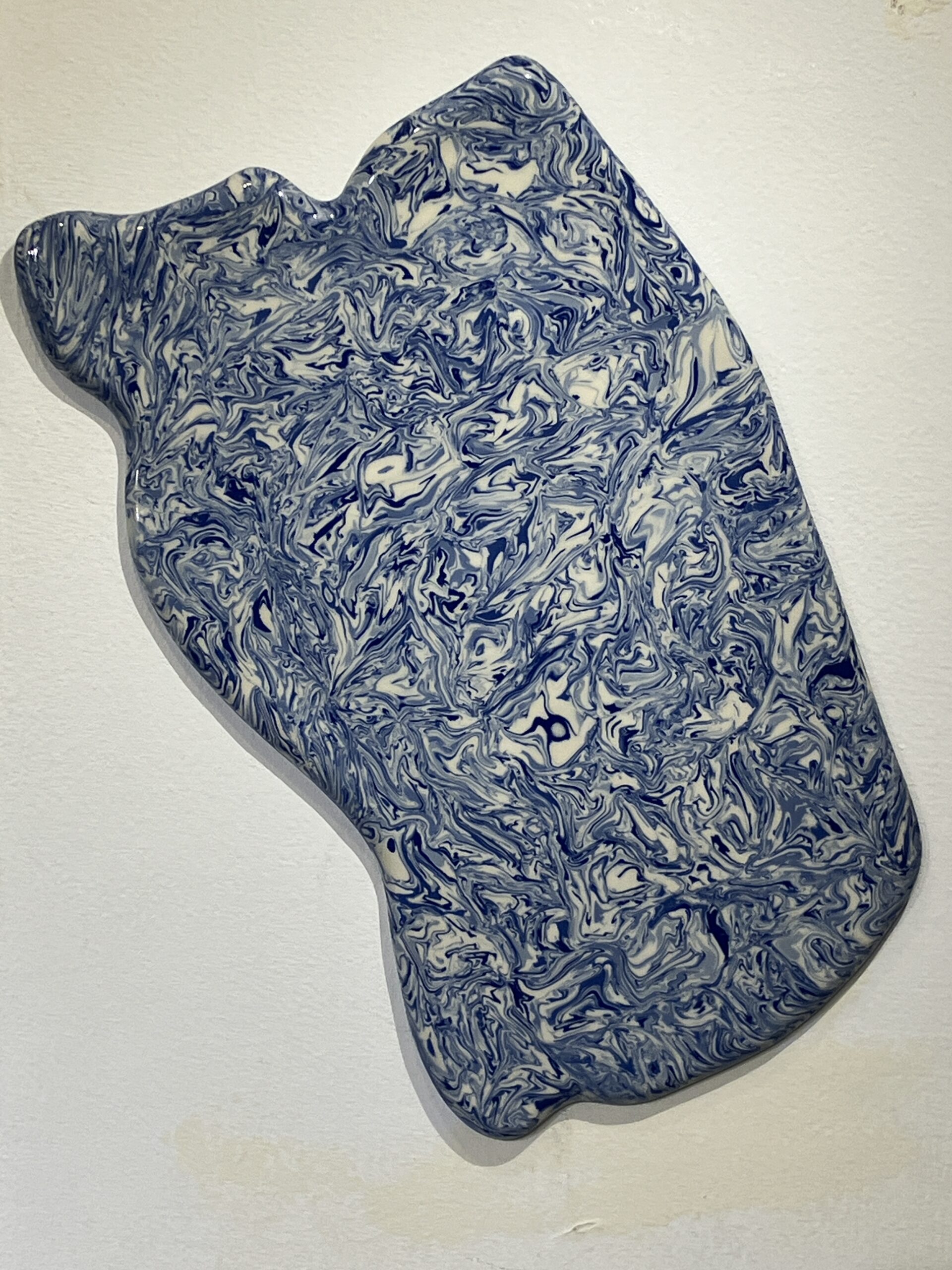
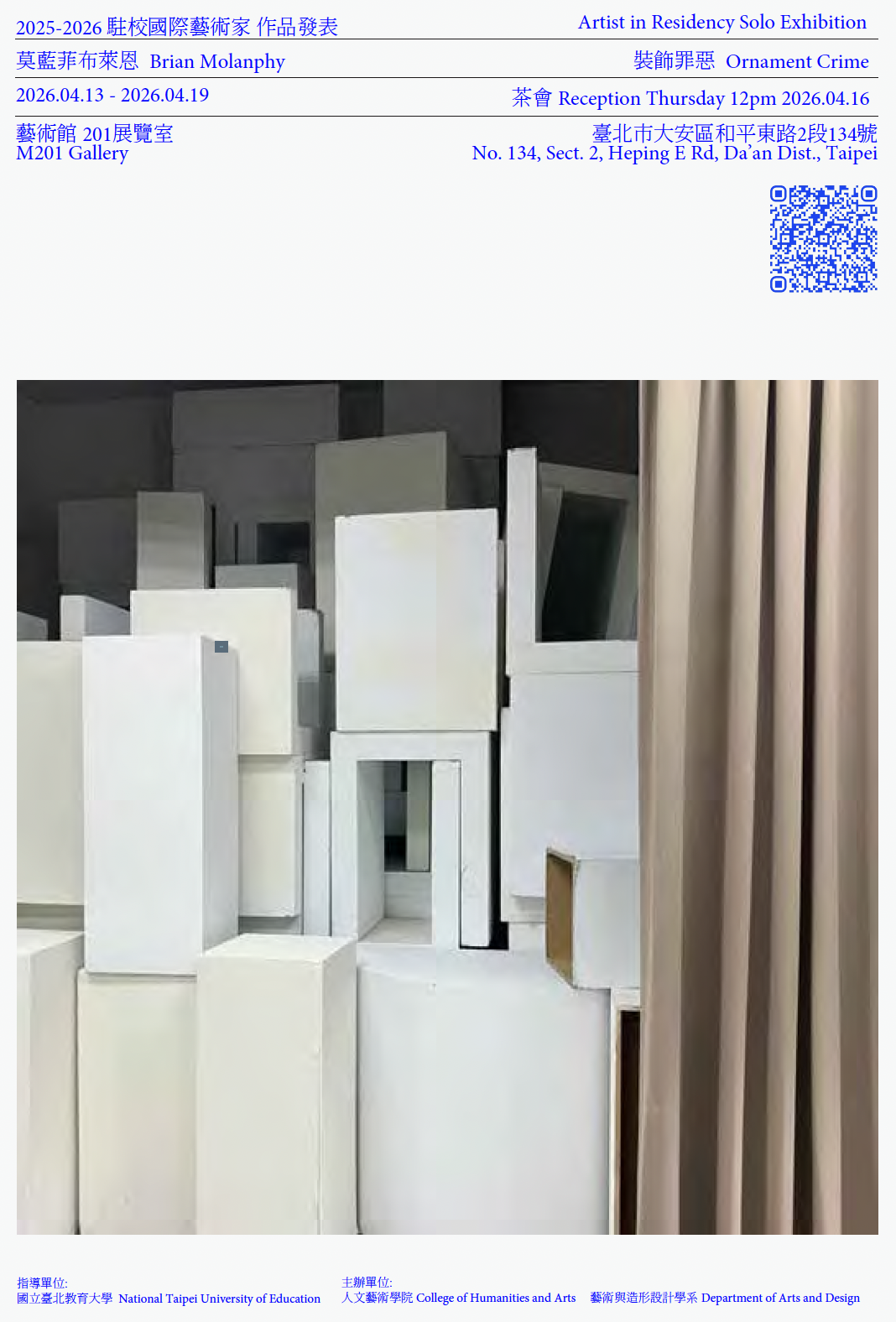
• Ornament Crime裝飾罪惡 follows Criminal Centennial, 2013 & Programming, 2015/2017 in study of the circle & the square, & decoration & surface in modern architecture, inspired by “Ornament & Crime”, 1913 by Adolph Loos. Loos’ article was used to turn “decoration” into a four-letter word, beleaguering discourse ever since. However, Loos used decorative stone, like marble, in his buildings. Upon entering the gallery of Ornament Crime, a viewer is confronted with a barricade of haphazard geometry intermittently overlaid with tiles, a kind of combination of contemporaneous inspirations from Louise Nevelson & John Mason. Initially Robert Morris’ Untitled (L-Beams), 1965 inspired the stacking of the forms but it was Doris Salcedo’s Untitled, 2003 that suggested infinite abundance of forms. Kim Dickey’s decorative response to Morris inspired the partial covering in Ornament Crime. To contrast with the stark, rough, matte white wall of undulating rectangular prisms—the university’s phenomenal collection of pedestals—21 blue & white glossy tiles flow across the wall. The tiles began as circles & squares but, like Marcel Duchamp’s & Tony Cragg’s lines, their pliable forms—clay sheets instead of string—were tossed in the air, resulting in their indeterminate shapes when they hit the ground. From here the process of preserving the gesture is long, like that of Garth Evan’s Frames. Internally, the fluidity persists in the marbled blue & white motif, but the form has since been fixed in the fire. Richard Serra & Anish Kapoor often finish the surfaces of their artworks either with matte depth or reflective gloss, making the artworks impossible to photograph well (like Ad Reinhardt’s & Francis Bacon’s paintings before them). Ornament Crime tiles are also too reflective to photograph well, but minutely detailed blue & white marbling sets them in opposition to Serra’s & Kapoor’s blunt black or red gestalt.
artworks cited
circle & square:
Duchamp, Marcel. Three Standard Stoppages, 1913-14
Cragg, Tony. Drawing With a Rope, 1972
Evans, Garth. Frames (Echoes), 1971-74
ground:
Nevelson, Louise. Dawn’s Wedding Feast, 1959
Mason, John. Blue Wall, 1959
Morris, Robert. Untitled (L-Beams), 1965
Salcedo, Doris. Untitled, 2003
Dickey, Kim. All is Leaf, 2011
surface:
Loos, Adolph. “Ornament & Crime” (« Ornement et Crime »), Les Cahiers d’aujourd’hui, 1913
Serra, Richard. Forged Drawing, 1978/2008
Kapoor, Anish. Blood Mirror, 2000
展覽《裝飾罪惡》(Ornament Crime)延續先前兩件作品的元素,分別為《犯罪百年》(Criminal Centennial,2013)中的圓形與方形,以及《程式設計》(Programming,2015/2017)所探討的建築裝飾與外觀。作品靈感來自於阿道夫·路斯(Adolph Loos)於1913年發表的〈裝飾與罪惡〉(Ornament & Crime)。該文章被用來將「裝飾」一詞轉變為貶義詞,從此困擾著學術界相關的討論。但路斯曾經仍在其建築中使用大理石等裝飾性石材。
步入《裝飾罪惡》的展廳,最先映入眼簾的是一道由不規則幾何形體構成的結構,其表面不規則地覆蓋著瓷磚。這樣的呈現方式同時受到了路易絲·內維爾森(Louise Nevelson)與約翰·梅森(John Mason)的啟發。形體堆疊方式的靈感最初來自羅伯特·莫里斯(Robert Morris)於1965 年的作品《無題(L型樑)》(Untitled (L-Beams)),但真正這樣大量且豐富的特性,則是聯想於多麗絲·薩爾塞多(Doris Salcedo)2003 年的《無題》(Untitled)。此外,金·迪基(Kim Dickey)對莫里斯作品所做的裝飾性回應,也啟發了本作中「局部覆蓋」的處理手法。
為了與由高低起伏的長方體——校方收藏數量驚人的展櫃——構成的粗糙且消光白色牆面形成對比,將21 片藍白相間且有光澤的瓷磚裝飾於牆面之上。這些瓷磚最初呈現為圓形與方形,當他還是可塑型的狀態時被拋向空中,落地時則產生了不規則的形狀。正如馬塞爾·杜象(Marcel Duchamp)與東尼·克拉格(Tony Cragg)兩件作品中線的表現方式,本展覽作品以瓷磚取代繩索來呈現。保存這一瞬間的過程變得漫長,類似於加斯·埃文斯(Garth Evans)的《框架》(Frames)系列。
就作品而言,流動感仍存留在藍白色大理石紋理之中,但形體已在燒製過程中被固定。理查·塞拉(Richard Serra)與安尼施·卡普爾(Anish Kapoor)經常將其作品表面處理成近乎無光或高度反射,使作品難以被良好的拍攝(這一點可追溯至艾德·雷因哈特[Ad Reinhardt] 與 法蘭西斯·培根[Francis Bacon] 的繪畫)。而《裝飾罪惡》中的磁磚同樣因其強烈反光而難以拍攝,但其細膩的藍白大理石紋理使它們與塞拉和卡普爾生硬的黑色或紅色風格形成鮮明對比。
引用文獻
關於圓形與方形:
Duchamp, Marcel. Three Standard Stoppages, 1913-14
Cragg, Tony. Drawing With a Rope, 1972
Evans, Garth. Frames (Echoes), 1971-74
關於地面/基礎:
Nevelson, Louise. Dawn’s Wedding Feast, 1959
Mason, John. Blue Wall, 1959
Morris, Robert. Untitled (L-Beams), 1965
Salcedo, Doris. Untitled, 2003
Dickey, Kim. All is Leaf, 2011
關於表象:
Loos, Adolph. “Ornament & Crime” (« Ornement et Crime »), Les Cahiers d’aujourd’hui, 1913
Serra, Richard. Forged Drawing, 1978/2008
Kapoor, Anish. Blood Mirror, 2000